Showing posts with label Regency. Show all posts

Wednesday, December 19, 2012

A Game of Hazard by Vivienne Westlake


In writing my recent novel, A Marquess for Christmas, I needed to find a game that the hero and heroine could play while the hero was mostly on bed rest. I wanted something that might surprise a jaded hero and increase the sexual tension in the story.

Games of chance and gambling were very popular during the Regency era. There were card games like whist, which was a game for two couples that is similar to spades, and faro, which involved a special machine to pop up cards. They also played black jack, but it was called vingt-et-un.

I decided not to use a card game because most games were so popular that everyone played them. I thought a dice game represented pure chance and likely appealed to those with a strong penchant for gambling. I figured it might also appeal more to men than to women, though I admit I took a bit of license in having the hero make that assumption.

Hazard - which is where we get the term for peril and the expression "hazarding a guess" - was a dice game very similar to craps. Players would choose a number and keep playing until they got that number, another winning number, or they lost.

In hazard, the main is a number between 5 and 9. If you roll a 2 or a 3, you are automatically out, no matter which number you chose. 11 and 12 can be a win or a loss, depending on what your main number is. Players basically keep rolling until they hit a winning or a losing number. I've heard that players should always chose 7 if they have a choice because that has the greatest statistical probability of winning. This may be the reason that hazard evolved into craps.

For the specific rules, try the Wikipedia article or see A Regency Primer on How to Play Hazard.

There is a fun online game that simulates hazard play. http://drakonlady.deviantart.com/art/Hazard-Dice-Game-Demo-187814264

Here is a snippet from my new release, A Marquess for Christmas:
*Edited to be suitable for a PG-13 audience*

 
When Violet popped open the box, he saw a plain wooden cup, four wooden dice, and two decks of cards. She took out the cup and dropped two dice inside.
“Shall we roll for the main or do you want to choose?” Kit asked.
“A lady always loves to have a choice.” She smiled. “I could be cordial and offer you the first pick, but since considerate players rarely prosper, I shan’t feel too poorly about it. I will play sevens.”
“Then I will play six.”
“Do you wish to go first?” She asked, shaking the cup. The mere sound of the dice rolling around in the holder was enough to get his blood pumping and his fingers tingling.
As he grabbed the cup, the tips of his fingers stroked hers. He let them linger as he eased the cup from her hand.
They were both quiet as he shook the dice. His gaze lingered over the exposed skin of her neck. The dressing gown was loose enough that he got a glimpse of her cleavage, but no more. He looked forward to peeling the fabric off of her and sliding his hands under her chemise.
Kit turned over the cup and let the dice fall. Seven. If he’d chosen seven as his main, he would have won, but now he had to roll again.
Do not pull a six. Do not pull a six. He slipped the dice back into the holder, saying his prayers for a win. A seven would guarantee a win.
After a strong shake of the cup, he threw the dice down. Two. He’d lost. Now it was Violet’s turn.
Her long, slender fingers took hold of the cup as her other hand grabbed the dice. She pressed them to her lips, closing her eyes, then plopping each one into the cup. Something about watching her mouth touch the die or perhaps the way she lowered her lashes in a silent prayer made his mouth water and his cock harden.
She loosed the dice . Eleven. How had she managed that? He had to blink a few times to be sure of what he saw. But sure enough, one die read five and the other six. Violet had won the first round.
“Should I have checked that the dice weren’t loaded?”
“Do not be a petulant loser.”
“Perhaps your fingers are magic?” he asked, taking hold of her hand and kissing the tip of each finger. He teethed her index finger. When he pulled her arm closer so that he could kiss her wrist, she stopped him.
“Do not attempt to distract me. You seek to throw off my guard so that you will win.”
“What I seek is another taste of your delectable skin.”
“Roll the dice. Do you wish to keep your main?” she asked.
“I think I shall switch to five,” he said before giving two fast shakes and tossing. Six. Like it or not, he was stuck with it again. He stared at the dice, wondering at the chances of that happening when he heard a tapping sound on the table.
“Do not give up so easily,” she said. “Though perhaps I should encourage you to acquiesce now.”
He rolled the dice. Eight. He neither won nor lost. The third time, he rolled a twelve. Two sixes, but not the one he needed.
As he picked up the dice and dropped them in the cup, he felt a firm pressure against his thigh. He groaned and dropped the cup when he felt it move to his groin.
A glance at Violet’s face revealed nothing, though there was a twinkle in her eye.
“God’s blood woman, what are you doing?”
“Hmmm?” She rested her head on her hand. “What do you mean?”
She massaged him, pressing her heel against his privates. Gripping the table, he closed his eyes, unable to move. How could he possibly concentrate when she did such devilish things to him?

A Marquess for Christmas is now available at Amazon, All Romance eBooks, Barnes & Noble, Kobo, and Smashwords.

Wednesday, October 17, 2012

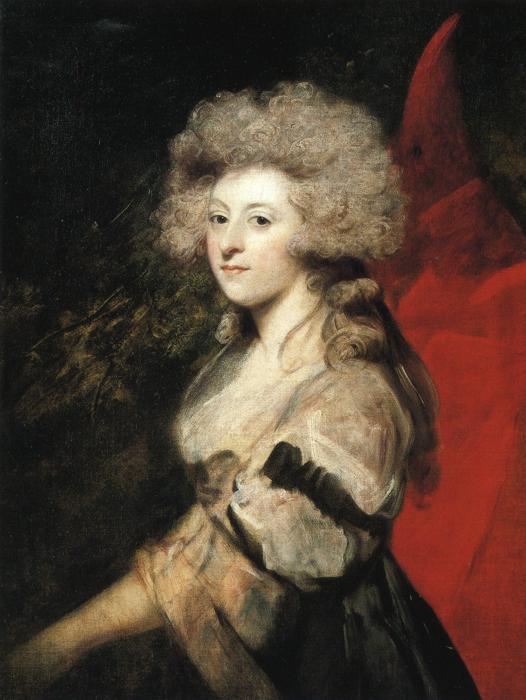
Maria Fitzherbert - The Secret Wife of Prince George by Vivienne Westlake


It was well known during the Regency that Prince George and his wife, Caroline of Brunswick, hated one another. He tried many times to accuse her of adultery and have the marriage dissolved. He also made it difficult for her to spend time with their daughter, Princess Charlotte.

What is not as well known is that the prince had a wife before Caroline. When George was 23, he married Maria Fitzherbert, a slightly older widow that he'd met the year before. He was so eager to marry her that he did so knowing that the marriage was illegal and it is said that he paid 500 pounds to get his chaplain out of debtor's prison so that the minister could conduct the ceremony.

In order to marry legally, the Prince had to receive permission from the king and the Privy Council. King George III refused to validate the marriage. One of the reasons that Maria was considered unsuitable as a wife is that she was Roman Catholic. Note that the Pope and Roman Catholic Church later upheld the marriage of George and Maria, though the Anglican Church did not.

The Prince of Wales was pressured to marry his cousin, Caroline of Brunswick, though the Prince had never met her and immediately disliked her once he had. The main incentive for Prince George to re-marry was that he was in quite a bit of debt and Parliament would increase his annual income once he married legally.

George let Maria Fitzherbert keep her 3,000 pound annual pension and they had an on again-off again relationship for most of his life. Just after his wife gave birth to Princess Caroline in 1796, the Prince put Maria into his will, leaving her his property and calling her "the wife of my heart and soul". Some time later, the two reconciled and were happy for a few years until they parted for the last time in 1808.

On his deathbed George IV kept her get well letter under his pillow and wore a miniature of her around his neck. And after he passed, it was discovered that he'd kept all of Maria's letters over the years.


For more information:

http://www.britannica.com/EBchecked/topic/208924/Maria-Fitzherbert
http://www.catholicity.com/encyclopedia/f/fitzherbert,maria_anne.html
http://en.wikipedia.org/wiki/Maria_Fitzherbert
http://en.wikipedia.org/wiki/George_IV_of_the_United_Kingdom#Marriage_and_mistresses


Wednesday, September 19, 2012

Regency Hairstyles by Vivienne Westlake

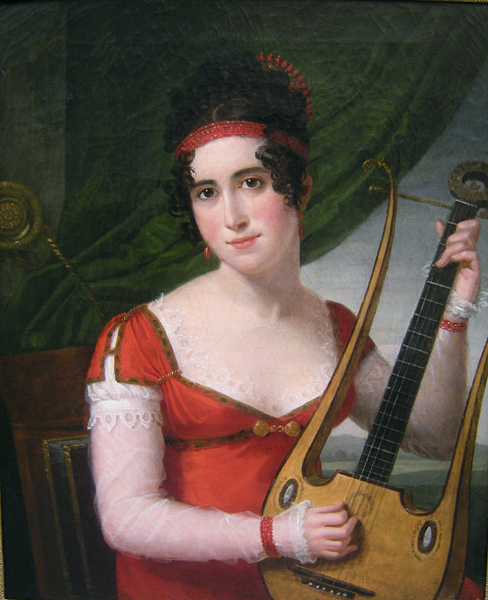
                                           Painting by Robert Lefèvre. Circa 1810 (Wikimedia Commons)


In the late 18th century, hairstyles were dramatic. The higher the better. People wore wigs or powdered their hair and often added adornments such as feathers, flowers, ribbons, and fanciful hats. Hair styling went through a dramatic change in the Regency. Under the influence of Neoclassicism, hair styles became simple and modest as ladies tried to achieve the look of the Ancient Greek & Roman goddesses.

Hair was often swept up and worn in a bun or braided and pinned up. If a woman wore her hair long, it was usually not worn lose but put in a ponytail or twist and worn to one side. Curls were very popular during this period, so many women would have to artificially curl their hair to achieve the perfect look.

Here are a few wonderful resources that discuss Regency hairstyles in detail.


Jane Austen's World has a great article showing many images of Greco-Roman hairstyles and their Regency adaptations. http://janeaustensworld.wordpress.com/2009/11/07/regency-hairstyles-and-their-accessories/

Mother Earth News shows how to curl your hair using curling papers, which was a popular method during the Regency (curling irons weren't as common as they are today). Women would apply a pomade and then use the curling papers to create the ringlets you often see in portraits and Jane Austen films. http://www.motherearthnews.com/do-it-yourself/curling-hair-zmaz71ndzgoe.aspx

Rapunzel's Resource, a website devoted to hairstyles for women with long hair, has fun tutorials showing how to re-create the hairstyles from Emma (she includes styles from the Kate Beckinsale, Romola Garai, and Gwyneth Paltrow films). http://rapunzelsresource.wordpress.com/?s=Emma
Note: posts usually include biblical quotes and religious references.

Jane Austen Today offers a 9 minute video tutorial on how to create an "up do" in Regency style. http://janitesonthejames.blogspot.com/2010/03/how-to-make-regency-outfit-regency.html

Timely Tresses offers patterns and materials to make bonnets suitable for Regency and Victorian ladies. They also have a page where you can order fashion plates to see what the gowns and hair styles of the period were like. (You can preview some of the plates directly on the website)

     Main Page: http://www.timelytresses.com/

     Fashion Plates: http://www.timelytresses.com/fashionplates/fashionplatebooks1800-1839.html

What is your favorite hairstyle for long hair?


Wednesday, August 22, 2012

Choosing The Right Name by Vivienne Westlake

One of the first things I do when creating a story is to give a character their name. Usually, it's the first name, though in my Regencies and Victorian books, I often do think of the last name and title of my hero. I can't get into the book if I don't have a sense of the names and faces of my primary characters.

Occasionally, I make up a last name, but most of the time I like to look up a surname or title and see if it exists at House of Names. You can find many British, Irish, and French surnames listed here as well as their histories. I find it interesting to see the family crests, mottos, and origins of surnames. Sometimes reading these can spark an idea or give me confirmation about a sense of character. Most of the time, I use it to confirm that the name existed during the period I'm using it.

When looking up first names, I often consult several baby books. I prefer books that list the history of a name (some books will tell you famous people over the centuries who bore that name or tell you if the name originated from a book or play). But, there are two websites I do like to consult to look at the history of a name:

Behind the Name gives the etymology of first names and allows you to search by name or by the country of origin. It also includes names from the Bible and Ancient Mythology. This is useful for me when I want to find a name that a name fits a particular location or time period.

Baby Name Wizard has a fun tool that shows you the popularity of a name over different decades. While it only goes as far back as the 1880s, I find it useful to see whether a name is a more modern invention or whether a name would have been common in the 19th century.

I tend to pour through books and websites just to find the right name. Sometimes, I get a name right away and it sticks, such as Delphine Sharpe, the heroine in The Captain's Wicked Caress (and the sister to Lady Rowena Northam, the heroine in my first book). Other times, it takes me a day or two to figure out the right name.

I find I am drawn to names beginning with certain letters (A and E are my favorites). For some reason, in my Regency series, I keep choosing names that start with the letter R and I've had to rename some characters to avoid confusion.

What is your favorite name for a hero or heroine? Do you find you respond better to a hero if he has a strong sounding name? Would you be put off if the hero had a boring name like Chuck or Stanley? What about an antiquated one like Delbert?

Wednesday, July 18, 2012

Seeing Clearly in the Regency - Vivienne

If you ever wondered what people with poor eyesight used during the Regency and Georgian eras...

Since ladies and gentlemen did not wear spectacles out in public, many people used a quizzing glass. They were so fashionable that even those with good vision would carry them. A quizzing glass would be held up to the eye to see a person or object better (rather than directly holding it over an object or newspaper as you would a magnifying glass). A person would wear it by stringing a gold chain or ribbon through the smaller loop.

While I think it started out as a practical device for those with poor eyesight, it was also used at social gatherings to people watch or to indicate annoyance or interest in another guest. Historical Hussies mentions that Beau Brummel used the device to demonstrate his disapproval of people he didn't like. In a society where manners and good breeding were everything, a person could give an insult or  approval without saying a word.

Another popular viewing device was a lorgnette, which was basically a cross between a quizzing glass and spectacles. It is the precursor to modern opera glasses. The lorgnette was invented in 1770, while the quizzing glass was invented in 1727.


For more information, visit:
http://historicalhussies.blogspot.com/2010/08/regency-glasses-and-eyeware.html
http://www.college-optometrists.org/en/knowledge-centre/museyeum/online_exhibitions/spectacles/lorgnettes.cfm
http://www.rubylane.com/item/286086-2038/BEAU-BRUMMEL-Georgian-Quizzing-Glass
http://www.eyeglasseswarehouse.com/pages/quizzing.html
http://www.eyeglasseswarehouse.com/pages/lorgnette.html

Wednesday, May 23, 2012

Persuasion - Vivienne


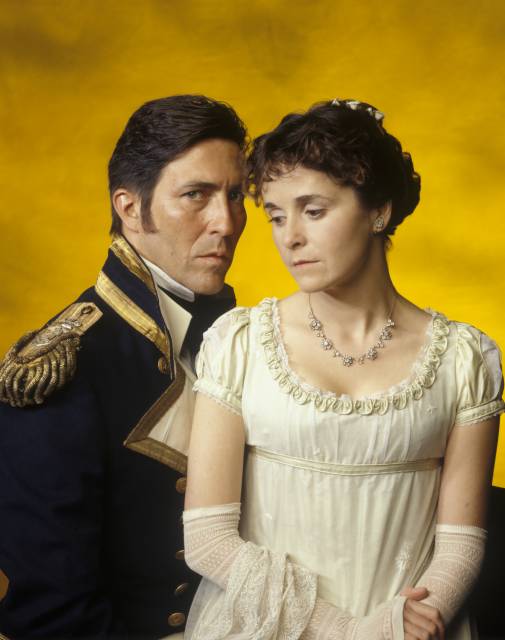
Though Pride & Prejudice was my favorite Jane Austen novel for a long time, Persuasion is becoming my favorite as an adult. It speaks of mature love, what it means to sacrifice, and also the importance of learning from your mistakes.

Most of my Regency stories feature a lost-love theme where characters who were once lovers or friends meet years later and rekindle their romance. What draws me to Persuasion, and to these kinds of stories, is the belief that we can always learn from our mistakes and that love can grow and change over time. I also believe that when you truly love someone, a part of them stays with you, even if the relationship ends.

When Anne Elliot lets her friend and others talk her out of marrying Frederick Wentworth, she sacrifices herself for her family and friends. She does what is expected of her and she values pleasing others over pleasing herself (which is arguably Anne's greatest flaw). But after she does what everyone wants, Anne retreats into her role as the devoted sister and daughter and becomes nearly invisible.

Captain Wentworth carries the hurt of Anne's rejection for years and even if part of him wants to stay angry with Anne, when he sees her again, the old feelings come back. He doesn't let on at first, and even attempts to find a new match, but circumstances force him to deal with his feelings for Anne. He comes to realize that he cannot live without her and when he proposes this time, it is with a new respect for her and a deeper affection.

Though I really enjoy love-at-first sight stories, there is something about lost-love and friends-to-lovers stories that always get me. It's like the click of a key in the lock or the last puzzle piece being put into place.

What is your favorite reunion or lost love story from history or literature? 

*Answer in the comments to win a copy of my novella, Lady Northam's Wicked Surrender.

Wednesday, April 18, 2012

Lighting in the Regency Era


Though gas lamps were used on a couple of London streets as early as August 1807, it was not a common light source in the Regency period. During the Georgian/early Regency era, street lamps typically used whale oil. Around 1817, London theaters started to use gas lighting and there were other big towns that were partially lit by gas. It wasn't until 1834 that 600 miles of gas lines were laid throughout London to light up the streets and public areas of the city.

The most common forms of lighting in the Georgian and Regency periods were rush lights, candles, and oil burning lamps. Note that different social classes used different forms of lighting.

Rushlights

Rushlights were very cheap and easy to make (and have been used since the Middle Ages). Candles were expensive, both due to the materials and because they were taxed. So poor families needed a cheaper means of illumination. Rushlights were made by taking a rush (or even a splinter of wood) and dipping it in grease. Rushes were cut fresh and then soaked. Soaking them made it easier to peel off the hard outer skin. Then the rush would be dipped in mutton grease (or other animal fat). There were special holders for rush lights that pinched the wood between metal pliers. Once the rush burned down to the pinchers, the light went out. Obviously, rushlights did not burn for very long so you'd have to keep burning new ones if you weren't going to bed.

If you'd like to try out a rushlight, Jas Townsend & Son, Inc. makes replicas of old 18th century items. Click on the image for more information. This is a combination rushlight holder which allows for both a candle and a rush. You can see the little pliers holding the rush.


Tallow Candles

Servants and middle class families would use tallow candles. Basically, these candles are made from fat rather than from wax. They were cheaper than wax candles because you could use the fat from your sheep or cows and if you didn't use it all, that fat could be preserved for soaps or for use in the kitchen. A cotton or linen wick was dipped into the fat and solidified. You'd have to keep dipping it until you got the candle to the size you wanted. Technically, you could get around the tax by making a candle from home, though you'd have to buy the material for the wick. If you were purchasing the candle, you had to go to a licensed chandler (I'm guessing to make sure that you paid the appropriate taxes). Tax on tallow candles was a penny/pence.

Keep in mind that both rushlights and tallow candles were made with fat, so they would stink when you burned them. Different methods were suggested for alleviating the smell. Some people soaked the wick in vinegar; others burned pastilles of gunpowder! Tallow candles didn't stay functional as long as wax, so you'd only keep them for a few months, and the wicks had to be trimmed periodically or the candle would sputter.

Wax Candles

Wax candles were pricey and were often made of beeswax, though I did see a mention of spermaceti, which is a wax that comes from the head of a sperm whale. Only wealthy people could afford wax. Going to a house that is lit entirely with wax candles is a significant sign of wealth. Often people would burn tallow candles when there were no guests present and preserve the wax candles for company.

A housekeeper would be in charge of the wax candles and she was allowed to collect the leftover wax stubs and sell them to tradesmen. I saw a funny reference where one household only allowed the butler to keep the wax candles and the housekeeper kept the tallow candles (which indicates how valuable they were).

How to Light a Candle

Here is a fun video I found last month that shows how to light a candle (hint, it requires more than just a match). You may have to increase the volume.

Spunk or Sulfer Match (shows how to light a candle with a flint and tinder tube)


Oil Burning Lamps

Oil lamps would burn whale oil, rapeseed oil, or lard (which was used by the lower classes). Prior to the Regency, oil lamps were "floating lamps" where you would put a wick inside of a bowl of oil and light it. Note that light from a floating lamp burns red. In the late 18th century, people started putting a glass container on top of the oil lamp so that the flame would burn a bright yellow.


Sources:

Greton, Lel. "Rushlights." Old & Interesting Blog. Web. 17 Apr. 2012. <http://www.oldandinteresting.com/rushlights.aspx>.

Hughes, Kristine. The Writer's Guide to Everyday Life in Regency and Victorian England, from 1811-1901. Cincinnati, OH: Writer's Digest, 1998. Print.

Pool, Daniel. What Jane Austen Ate and Charles Dickens Knew: From Fox Hunting to Whist : The Facts of Daily Life in Nineteenth-century England. New York: Simon & Schuster, 1993. Print.

*Note all images link back to their original source

Wednesday, March 21, 2012

Layers of Regency Dress - Vivienne


I started reading Regencies in High School when I fell in love with Sense & Sensibility (the Emma Thompson & Kate Winslet version). I read Jane Austen's Sense & Sensibility, Pride & Prejudice, Emma, and Northanger Abbey shortly after. Around my junior year, I also discovered Amanda Quick and devoured as many of her Regency romances as I could find.

One of the things I like about writing Regency and watching the lovely Austen-based films is the clothing. There was a move away from the elaborate, flamboyant excess of the 18th century toward simplicity and cleanliness. Gone were the brightly colored jacquard and damask silks and heavy powders and perfumes (to cover up the fact that no one bathed).

It was under the influence of Beau Brummel that simple, elegant men's suits became popular. Women moved away from the rigid structure and large dresses of the 17th and 18th centuries. The silhouette was softer and--comparatively speaking--the dresses were barely there.

But what went over and under the thin muslin gowns that were popular during this period?

GLOSSARY OF REGENCY DRESS (WOMEN)

(This is in order of being worn rather than alphabetical order.) *Note that all images link back to their original source.

Chemise - This was a basic white linen or cotton shift on top of which everything else was worn. (Think of the most basic short sleeved pull over white nightgown with no buttons)

Stays - Stays are basically a corset, but many times would be shorter than a traditional corset. I've seen some long ones and I've seen super short ones that are sort of like a bra. Essentially, the Regency version of a corset was designed to push up the breasts and flatten the front.


This image from Sense & Sensibility patterns shows a chemise and the short stays.

Busk - The busk is a little piece of wood that you stick down the front of your stays which helps keep the front of your dress straight under the bust. Obviously, you'd only have a busk if you wore longer stays.


You can see from this picture that there is a long white space in the middle, which is where the busk would go.

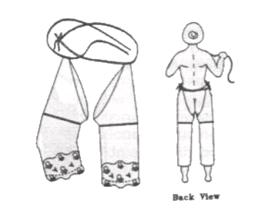
Drawers & Pantalettes - Ladies drawers were considered very risque because they were made to look like men's pants/underwear. Technically they came to fashion in 1806, but not everyone wore them (I think they were more common in the later Regency). Drawers were basically two short leg coverings and were tied around the waist with strings, leaving the necessary bits open for ease of using the privy/chamberpot. Pantalettes were drawers that were more decorative and designed to be seen, in case a lady should lift her skirt or stretch out her legs. Some women wore drawers instead of a petticoat.

This is a basic set of drawers.

Petticoat - Over the stays/corset, a lady would wear a petticoat. The petticoat is a long, basic white skirt. However, the importance of a petticoat cannot be overstated. Regency women liked dresses made of thin cotton muslin, which shows pretty much everything. If there wasn't a petticoat (or drawers) under the chemise and dress, your favorite Regency lady would look like a prostitute.

Stockings - Stockings were often white and made of silk, wool, or cotton. They were short (think knee-highs) and were tied off with garters just below or just above the knee. Some women might embroider their stockings.

Gown/Dress - There are different dresses for different times of day and different activities. So insert the appropriate dress here. Dresses might be made of cotton/muslin, silk, satin or velvet. White was one of the most popular colors of the period, though there were also patterned dresses. Remember that the muslin of the Regency was a thin, loosely woven fabric (think of something like chiffon or a lose batiste or thin, sheer cotton lingerie). Many gowns were low cut and designed to emphasize the bust.

Fichu - This might be worn over or under a Regency lady's gown for cool weather or for modesty. It is a triangular piece of fabric that might be tucked into the gown or worn over it as a shawl. Some were simple and sheer and looked a lot like a handkerchief, while others were frilly and elaborate. Most of the ones I've seen were white cotton or lace, but there are examples of printed fabrics and knitted fichus.


In this example, an 18th century lady has a fichu tucked into her dress.

Spencer - This a short jacket worn over a dress, usually made of a thicker material such as velvet or wool. It basically covers the bust and arms.


Here Elizabeth Bennet (played by Jennifer Ehle) is wearing a basic spencer as she walks with the dashing Mr. Wickham.

Pelisse - This was a long, fitted (in most cases) outer garment that was worn over a dress. Originally, it was a fur lined coat or cloak, but in the Regency, it might also be a thick silk long jacket that could be worn at a party. In the winter, this would be a woman's version of a greatcoat and would be made of a heavy fabric, such as wool or velvet, and lined with fur. In the summer, it might be a silk coat or it might be an over-garment that was worn as part of the dress.


This pelisse from 1811 is lined with fur.


This is an example of an indoor pelisse that would be made of a lighter fabric.

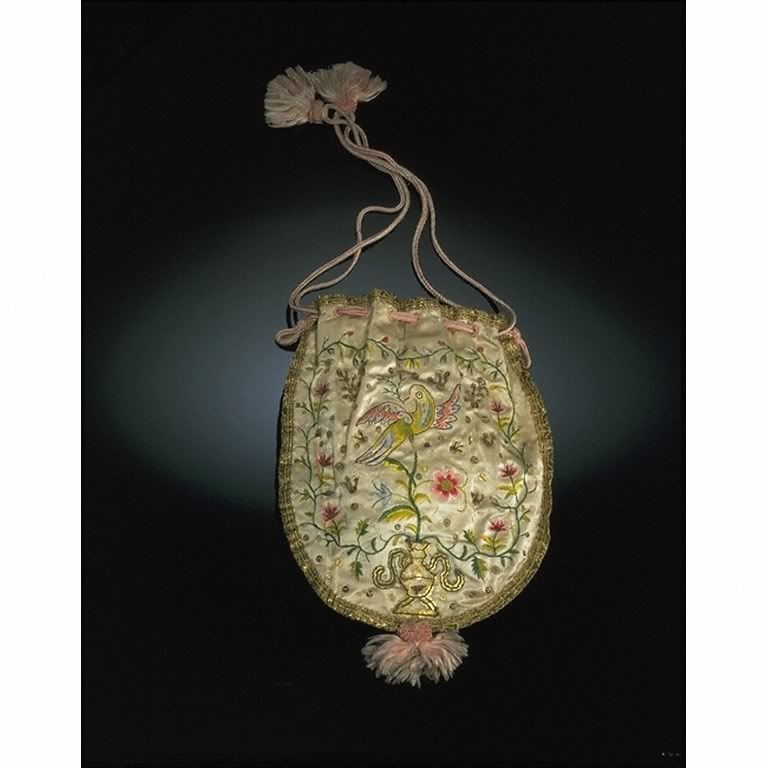
Reticule - A reticule is a small purse. It might be a simple satin bag or it might be embroidered and decorated. Many examples have drawstrings.


Here is an example of an embroidered reticule.

These are the basic items of a Regency lady's costume. I did not include cloaks (most of us know what a basic cloak looks like) and riding habits (which are special dresses designed for riding a horse). And of course, no lady's costume would be complete without hats, gloves, and shoes.